 OFFICIAL SITE OF THE STATE OF NEW JERSEY
Efficient Home Design
Energy Efficient Home Design

Overview
Efficient home design refers to improving a building’s energy efficiency through construction upgrades, such as reducing heat loss through improving the building insulation and installing high-performance windows, efficient HVAC systems with smart controls and renewable energy systems to drastically cut energy use for heating, cooling and lighting. Designing or retrofitting a building with these strategies in mind can result in money savings, boosted comfort within the building, and reduced environmental impact.
Weatherization is the concept of making a building more resistant to weather conditions and improving its energy efficiency. Weatherization focuses on enhancing a building’s envelope.
A building envelope is the barrier that separates the inside of a building from outdoor conditions. By reducing the amount of air entering the building that affects the building’s internal temperature, there can be more control for heating, cooling, and ventilation.
For more information on efficient home design, visit Efficient Home Design | Department of Energy and NJ Green Building Manual.
Benefits
Weatherizing a building will result in less heat escaping outdoors and better controls the building’s internal temperature throughout the year. This leads to increased energy efficiency and comfortability within a building and may increase energy savings.
Weatherization can also improve a building’s conditions that would allow for other energy technology upgrades, such as installing solar panels or upgrading heating and cooling systems to more efficient technologies.
How to Achieve Energy Efficient Home Design

There are many strategies to improve a building’s envelope, such as:
- Upgrading insulation, siding, or roofing
- Improving liquid water and water vapor control
- Increasing window and door efficiency
Air Sealing
To achieve higher home efficiency, building owners can reduce the amount of air entering and leaving a building through cracks and gaps within the building envelope. Caulking and weatherstripping are two methods to do this.
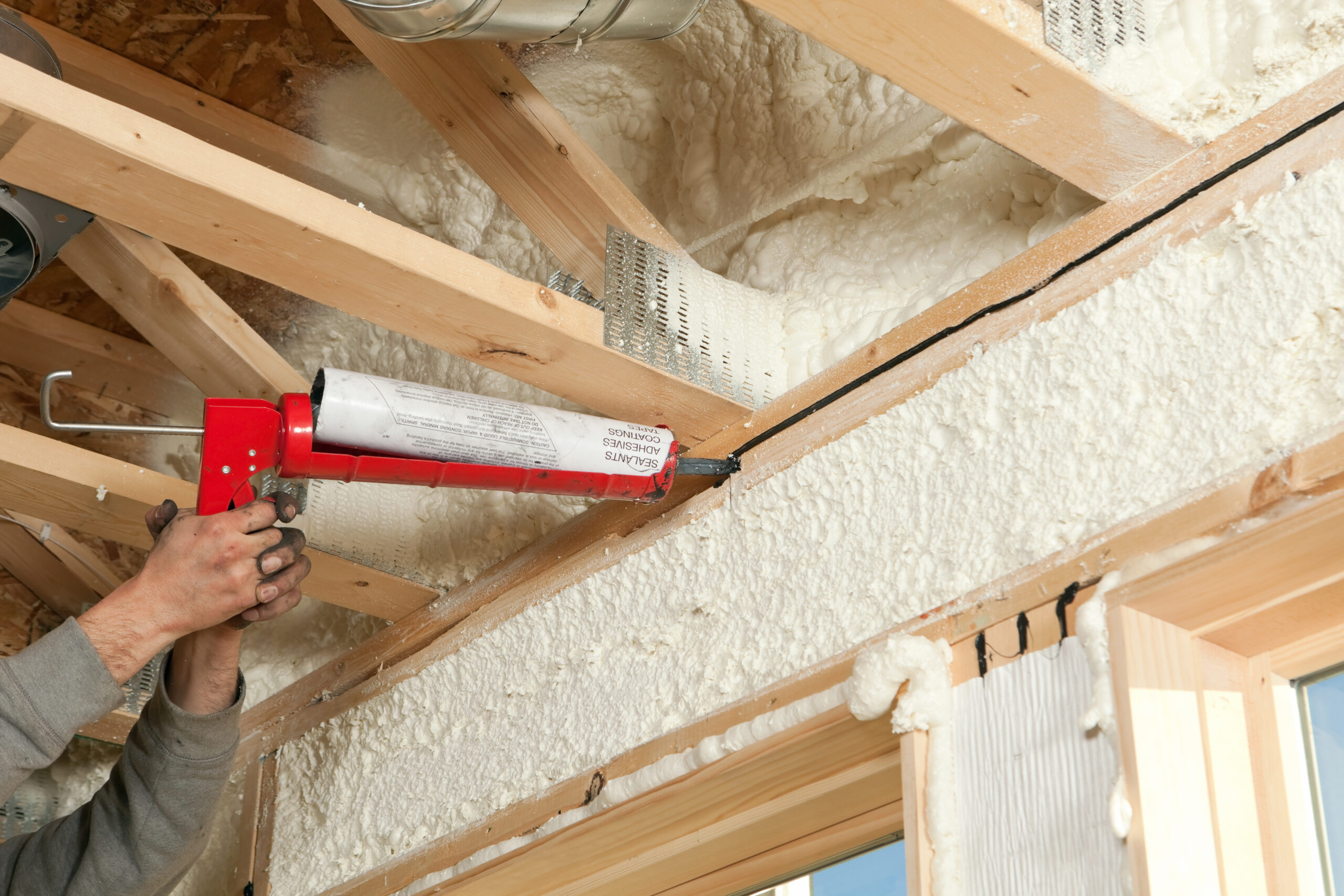
Caulking
Caulking is a flexible material used to seal cracks between stationary objects, and may be used around faucets, pipes, drains and more, to reduce water damage and prevent air leaks.
Weatherstripping
Weatherstripping is the process of sealing gaps, such as through doors and windows, to avoid drafts and water intrusion.
For additional information, visit Air Sealing Your Home | Department of Energy
Cool Roofs
A cool roof reflects higher amounts of sunlight to create a cooler building interior, and often has a high “thermal emittance,” or high ability to release heat into the atmosphere for more cooling. This can reduce the urban heat island effect and potentially increase the roof service life.
Cool Roof Options
Green Roof
Green roofs use vegetation from plants to cool and insulate the roof.
Color
The color of a roof can serve as a protective coating from absorbing the sun’s heat. White and lighter colors can reflect 60-90% and darker roofs can reflect 30-60%.
Steep Sloped Roof
Cool roof options for buildings with steep sloped roofs include wood or polymer shingles, clay, concrete or slate tiles, and metal shingles or tiles.
Low Sloped Roof
Cool roof options for buildings with low sloped roofs include built-up roofs, modified bitumen sheet membranes, and spray polyurethane foam roofs.


For more information on cool roofs, visit:
Landscape Shading
Well-planned landscape shading can increase property shade and act as a windbreaker to reduce energy usage. Some considerations for landscape shading include the climate zone, sun direction, and shape, size, and location of shadows created from plants and the landscape.
Landscape Shading Options Specific to NJ
Climate: Temperate Region
- Maximize shade in warmer months
- Maximize heating in colder months
- Deflect winter winds away from building
- Tunnel summer winds towards building
- Use native plants and deciduous trees
- Plant slow-growing trees for increased drought and storm damage resistant
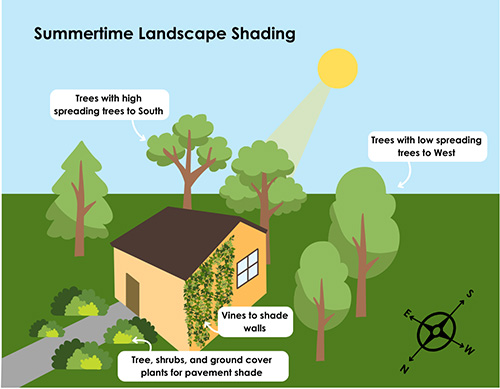
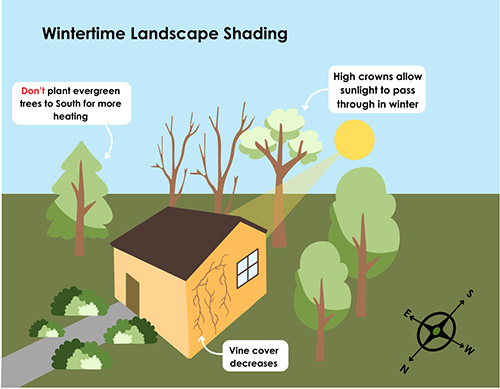
For more information on shading your property, visit Energy-Efficient Landscaping | Department of Energy
Passive Solar
Passive solar is a method that takes the buildings location, climate, and materials into consideration to make the building more energy efficient. By doing so, heating and cooling needs are reduced and can be met using solar arrays.
A passive solar home collects heat from the sun from the south side windows and stores it using a variety of materials. Once the energy is stored, it can be distributed throughout the home for warmth, or it may be ventilated outside.
Tips and Strategies
- Use a home energy audit when remodeling
- Create efficient house design with professionals
- Consider the site selection

For more information on passive solar, visit Passive Solar Homes | Department of Energy
Thermal Insulation
Thermal insulation creates resistance for heat flow, which can trap heat and reduce the amount of cold air entering a given area. For maximum efficiency, the entire building should be insulated to reduce unwanted heat loss.
Benefits include reduced cold drafts, increased privacy, and temperature control.

Radiant Barrier
A type of insulation to reduce summer heating by using a reflective material oftentimes installed in attics. When a roof is heated, heat travels inside of the attic in different ways, such as through the air ducts and the floor. The barrier decreases the amount of heat transferred from the roof to other areas.
For insulation installation information, visit Types of Insulation | Department of Energy
For information on where to insulate in a building, visit Where to Insulate in a Home | Department of Energy
Ventilation and Moisture Control
Ventilation
Ventilation is necessary to supply fresh air to all parts of a building, which assures the safety and comfort of occupants. Ventilation improvements are the most cost-effective way to increase energy efficiency within buildings, especially when combined with other techniques. Determining the proper ventilation system depends on many factors, such as the number of occupants in a building, daily activities, health concerns, and more.
Ventilation Types
Natural Ventilation
Movement of air through openings, small holes, and cracks in a building from uncontrolled forces, such as wind.
Spot Ventilation
Removes indoor air pollution or moisture near its source, such as with localized exhaust fans in kitchens and bathrooms.
Whole House Ventilation
Controlled and uniform ventilation throughout an entire building by using fans and ducts to replace stale air.

For more detailed information on ventilation systems, visit:
Moisture Control
Properly ventilated buildings greatly control moisture and reduce related issues.
Benefits to moisture control include prevented mold growth, improved air sealing and insulation methods, and improved building efficiency,
For more information on moisture control, visit Moisture Control | Department of Energy
Windows
Did you know that almost 30% of a home’s heat energy is lost through windows?
Making improvements to windows can lead to many benefits, including temperature control, reduced cold drafts, increased privacy, and decreased heat loss.
Window Improvement Options
Multi-Layer Glazing and Window Films
Films can be applied to windows to protect the building from solar arrays that cause heat gain, resulting in improved energy efficiency and thermal resistance.
Storm Windows
Reduces the amount of heat and air traveling through the window and protects the building from weather events. Low emissivity storm windows can further reduce heat flow and save energy.
Window Attachments
Examples of window attachments include shades, blinds, screens, awnings, curtains, and shutters. Depending on the orientation of the home and amount of sunlight, opening and closing window attachments at certain times throughout the day will lower the amount of heat being lost.
For more information on energy efficient window coverings, visit Energy Efficient Window Coverings | Department of Energy